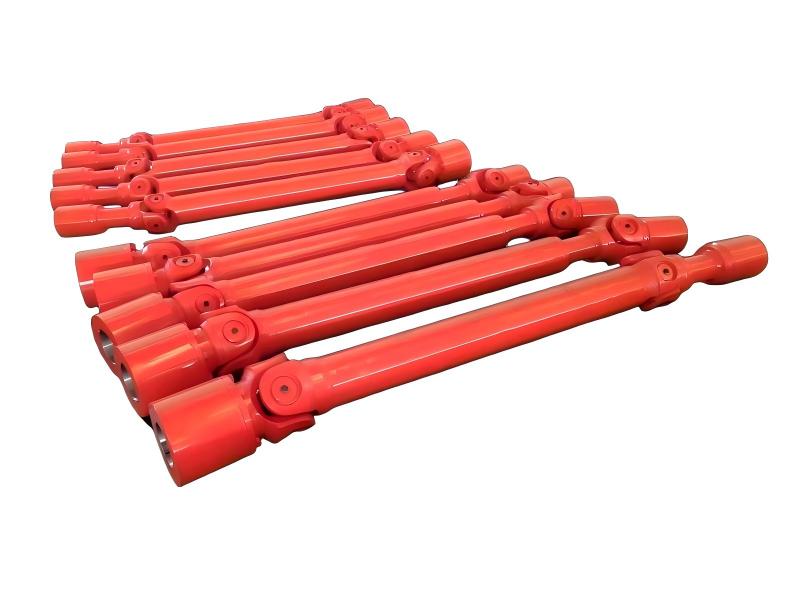



Development Trends of Universal Joint Couplings
2026-01-28 17:01Universal joint couplings (also known as universal joints) originated in the early stages of the Industrial Revolution. Based on the classic cross-shaft structure, they successfully solved power transmission challenges under large angular misalignment conditions in heavy-duty equipment such as machine tools, rolling mills, and marine machinery, becoming an indispensable fundamental component in mechanical transmission systems. With the continuous advancement of industrial automation and precision manufacturing, their structures and performance have been steadily upgraded and optimized to meet increasingly demanding industrial applications.
During the wave of industrial automation in the 20th century, the performance of universal joint couplings improved significantly. The use of high-strength alloy steels combined with advanced heat treatment processes greatly enhanced wear resistance, while the application of sealed lubrication technologies enabled long service intervals and even maintenance-free operation. At this stage, universal joint couplings evolved from general-purpose mechanical components into key transmission elements capable of adapting to high-speed, heavy-load, and other specialized operating conditions.
Entering the 21st century, driven by the stringent requirements of emerging strategic industries such as new energy and semiconductors for extreme operating conditions, the development of universal joint couplings has increasingly focused on lightweight design, extended service life, and environmental adaptability. Customized solutions featuring high torque capacity, minimal backlash, and high rotational speed have become the core of technological competition, pushing universal joint technology toward higher precision, greater reliability, and greener solutions.
Looking ahead, under the dual pressures of green manufacturing and extreme-duty applications, universal joint couplings will further integrate advanced materials, additive manufacturing, and intelligent condition monitoring technologies. They are expected to become critical transmission units supporting smart factories and the independent development of high-end equipment.
Against the backdrop of manufacturing transformation and upgrading, products with stable performance and reliable quality are becoming the driving force behind the advancement of key components. Especially in industries such as metallurgy, mining, and general machinery—where durability and operational continuity are of paramount importance—such products are not only fundamental to ensuring production safety and efficiency, but also serve as an essential cornerstone for the industry’s move toward high-end and intelligent manufacturing.
For more information and technical consultation on universal joint couplings, please contact Kudosworld.