



How do disc couplings compare to gear couplings?
2026-02-26 12:21Both Disc Couplings and gear couplings are suitable for high-torque transmission working conditions. As high-performance flexible couplings capable of compensating shaft misalignment, they differ significantly in working principle and performance characteristics, and are used in distinctly different applications.
Applications
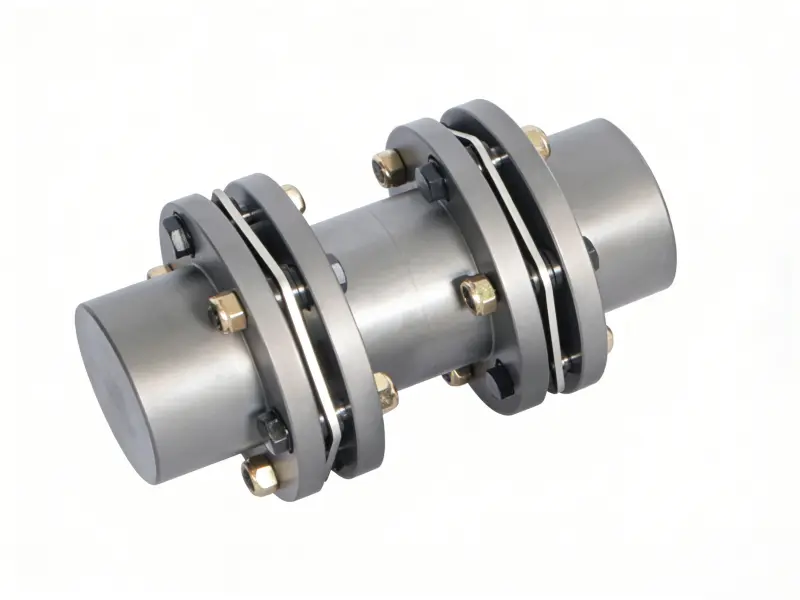
· Disc Couplings: Used in industries with high cleanliness requirements such as food, pharmaceutical, and textile industries, as well as in hard-to-access maintenance locations.
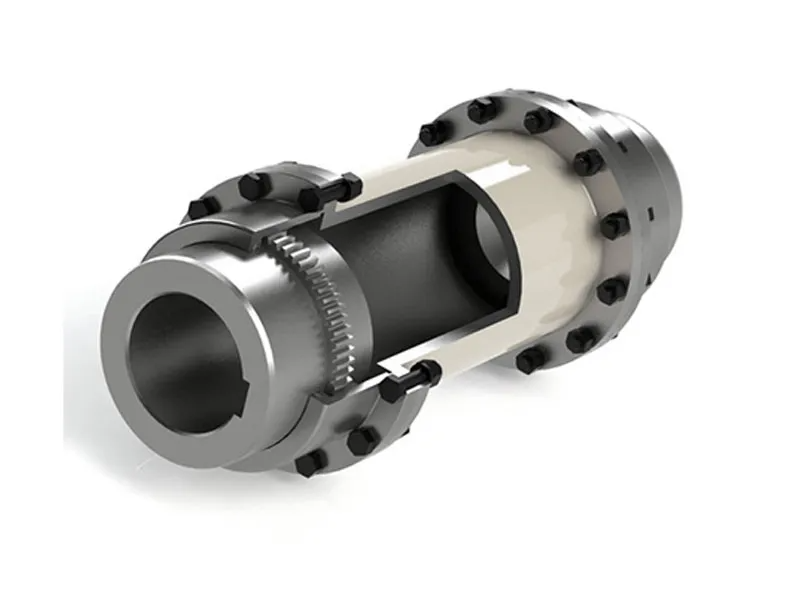
· Gear Couplings: Widely applied in heavy machinery transmission including metallurgy, mining, hoisting, and transportation.
Core Advantages of Disc Couplings
· Disc couplings are lubrication-free: No relative sliding parts, no lubrication required, completely eliminating oil leakage and contamination.
· Disc couplings are Maintenance-free: Eliminates regular inspection, replacement, and replenishment of lubricants, reducing maintenance costs and downtime.
· High precision & zero backlash: Provides accurate synchronous transmission with excellent dynamic response, ideal for high-precision servo drive systems.
· Compact, lightweight, easy to install: Fewer components, low weight, and low moment of inertia, supporting fast start-stop operation.
· Harsh environment resistance: Metal diaphragms offer a wide operating temperature range (standard: -40℃ to +300℃, extendable with special materials), suitable for high/low temperature, high humidity, corrosive media, dust, and other severe conditions.
Main Limitations of Disc Couplings
· When the transmitted torque exceeds the rated value, the diaphragm is highly susceptible to plastic deformation, fatigue fracture, or even sudden rupture, lacking the overload protection capabilities of the rigid coupling.
· Higher alignment accuracy required: Requires precise initial alignment to ensure long service life.
· No overload slip protection: Overload easily leads to diaphragm plastic deformation or fatigue fracture without buffering or slipping function.
Advantages of Gear Couplings
· Features an axial curved tooth design with excellent meshing contact, uniform loading, smooth transmission, high stability, and reliable performance in long-term continuous operation.
· Large tooth contact area and reasonable load distribution enable extremely high axial, radial, and shock load capacity, ideal for heavy-duty and high-torque applications.
· The gear meshing structure provides certain cushioning and vibration damping, reducing shock and vibration and shaft impact damage, and ensure stable equipment operation.
· High transmission efficiency with low power loss; strong structural strength and wear resistance ensure long service life under proper lubrication and maintenance.
· Transmits the highest torque capacity among couplings of similar dimensions, with outstanding torque density.
· Relying on the axial curvature tooth profile to achieve shaft misalignment compensation, the greater the tooth surface curvature, the larger the allowable angular deviation, with a maximum angular compensation of up to 6°, suitable for applications with significant misalignment.
Disadvantages of Gear Couplings
· Complex structure with multiple components (gears, sleeves, shafts), high requirements for tooth precision and heat treatment, difficult manufacturing.
· Relatively high manufacturing cost due to materials, precision machining, heat treatment, and assembly.
· Generates mechanical noise from gear meshing, sliding, and impact, which becomes more noticeable at high speeds, making it less ideal for low-noise environments.
Selection Summary
Selection should be based on a comprehensive evaluation of maintainability, transmission precision, misalignment compensation, operating cost, and working environment.
Share your application requirements with us, and KUDOSWORLD will help you select the most suitable coupling!