



Operation and Maintenance of Safety Couplings
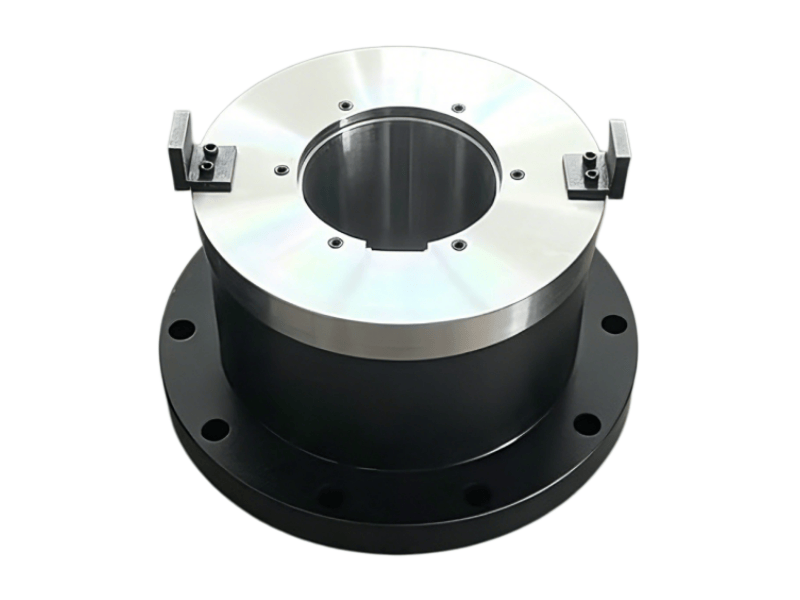
2026-05-26 14:05A safety coupling is a torque-limiting coupling consisting of a double-walled sleeve assembly. Once high-pressure oil is injected into the central oil chamber, the outer sleeve expands to create a tight interference fit with the hub, while the inner sleeve simultaneously clamps firmly onto the shaft; the safety coupling is then capable of transmitting torque directly proportional to the oil pressure. Should the transmitted torque exceed a predetermined threshold, the coupling will slip relative to the shaft; the shear tube is severed by a shear ring, causing the oil pressure to dissipate within a matter of milliseconds. At this instant—driven by the elastic recovery of the metal components—the coupling sleeve reverts to its original dimensions, resulting in relative sliding (free-wheeling) between the safety coupling and the shaft to ensure operational safety. Once the shear tube has been replaced with a new one, normal operation can be resumed within a very short period.
I. Basic Operational Requirements for Safety Couplings
Operating Environment
Ambient Temperature: -20°C to +40°C. In high-temperature environments (>40°C), enhanced ventilation and appropriate load reduction are required; in low-temperature environments (<-10°C), perform a low-speed warm-up prior to startup.
Keep the unit away from dust, mud, and corrosive media. For outdoor use, ensure adequate protection against rain and dust.
Strictly prohibit severe impacts or the application of external force (e.g., hammering) to the body of the safety coupling.
Media Requirements (Hydraulic Oil)
Recommended Oil: L-HL46 / L-HL68 Anti-wear Hydraulic Oil (suitable for general use at normal temperatures); for low-temperature regions, select a low-pour-point hydraulic oil.
Oil Cleanliness: Prevent the ingress of water or impurities; water ingress can lead to internal corrosion and pressure-relief failure.
Mixing hydraulic oils of different grades is strictly prohibited.
Startup and Operation Procedures
Pre-startup Checks: Verify that connection bolts and shaft-end fasteners are secure (not loose); confirm that the oil level is normal; ensure that safety protection devices are intact.
Strictly prohibit forced startup under load, frequent forward/reverse cycling, or operation under overload conditions; overloading will trigger the slip/pressure-relief protection mechanism.
II. Routine Inspections of Safety Coupling
Visual Inspection: Check the housing and seals for any signs of oil seepage or leakage; inspect the housing for deformation or cracks.
Temperature Check: Assess the housing temperature via touch or using a thermometer; immediately shut down the unit if the temperature is abnormally high.
Vibration & Abnormal Noise: Listen to the operating sounds to ensure there are no friction noises, impact sounds, or irregular vibrations.
Connection Tightness: Verify that the connecting bolts and locking components at both ends are secure and have not shifted.
Slippage Status: Under normal transmission conditions, there should be no noticeable slippage; while brief slippage during momentary overload serves as a protective function, continued operation is strictly prohibited in the event of prolonged, continuous slippage.
III. Routine Maintenance of Safety Coupling
Weekly Maintenance
Thoroughly clean dust and oil residue from the surface of the safety coupling;
Re-verify the torque of all fastening bolts, tightening them to the equipment's standard torque specifications;
Visually inspect the integrity of all seals.
Monthly / Every 500 Operating Hours Maintenance
Check the hydraulic oil level; if low, replenish with hydraulic oil of the same grade until the standard level is reached;
Inspect the pressure relief valve and pressure regulation components for any signs of corrosion or sticking;
Check the shaft sleeves and mating surfaces for any signs of wear.
Every 3–6 Months / Every 2000 Operating Hours (Reduced to 2 months for medium-to-high frequency operating conditions)
Oil Change Procedure;
Shut down the equipment and allow it to cool completely; open the drain port to drain the old oil;
Briefly rotate the shaft at low speed to ensure all residual oil is drained from the internal cavity;
Fill with new hydraulic oil to the specified level, ensuring neither overfilling nor underfilling occurs.
Seal Inspection: If oil seals or O-rings show signs of aging, hardening, or leakage, replace them immediately.
Pressure Calibration: Verify and adjust the hydraulic pressure settings according to the equipment's rated load; strictly prohibit arbitrarily increasing the overload protection pressure, as this would compromise the safety protection function.
Annual / Major Overhaul Maintenance
Complete Disassembly and Inspection: Internal pistons, friction pairs, springs, and oil passages are inspected for signs of wear, corrosion, or binding.
All wear parts, elastic components, and seals are replaced.
The unit is refilled with fresh oil, and the protection pressure is precisely set in accordance with the specifications on the nameplate.
After assembly, perform a 30-minute no-load test run of the safety coupling to confirm that there are no oil leaks, no abnormal noises, and that the protective functions are operating normally.
For further inquiries regarding safety couplings, please feel free to contact Kudosworld!