



Installation and commissioning of speed regulating hydraulic coupling
2026-01-09 10:57PST type hydraulic coupling is a Variable Speed hydrodynamic Coupling designed to be installed between an electric motor and a driven machine (such as a pump or fan), allowing the speed of the driven machine to vary within a wide stepless range while the motor operates at a constant speed. The power of the motor is transmitted smoothly and without impact through the oil flow between the input and output components of the coupling.
Common problems and solutions during installation and commissioning of Variable Speed hydrodynamic Couplings:
1.What is the starting sequence of the main control switch, hydraulic pump switch, and lubrication pump switch?
a. Control panel main switch on ( selector switch-Local mode for Local operation or Remote mode for operate from control panel
b. Oil Circulation pump on ( after that Oil pressure lamp converted Low pressure to normal pressure)
c. Radiator motor on (if available Air radiator)
d. Actuator always in Zero (Scoop IN ) position before HT motor start.
e. Start HT motor
f. Actuator operate from Scoop IN to Scoop OUT to achieve output speed
g. For stop the system-Opposite the above sequence.
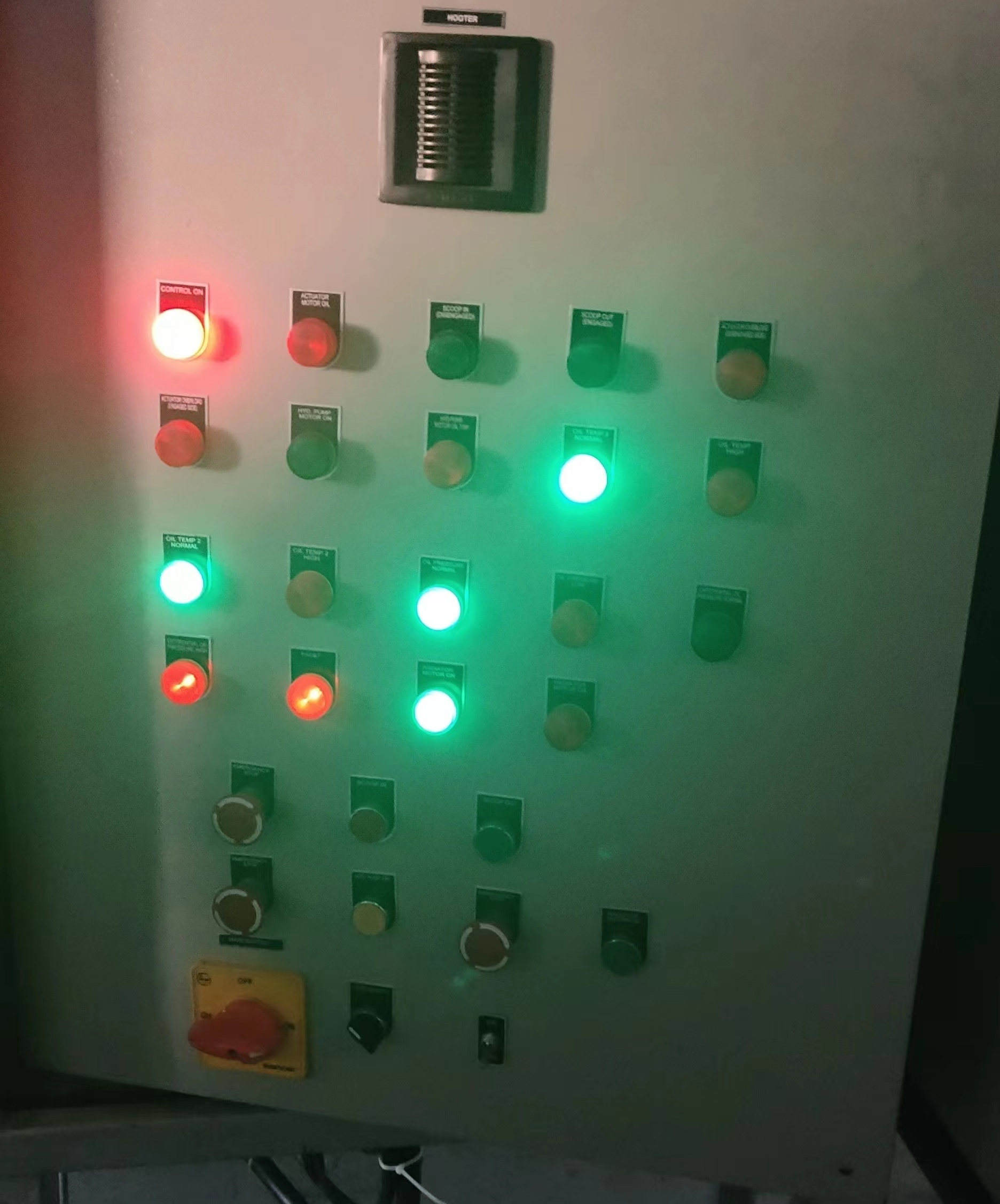
2. Regarding the three emergency stop buttons on the control panel. What do these three buttons correspond to? Which button should be pressed when a problem occurs?
1) Emergency Switch -1 to stop Oil circulation pump.
2) Emergency Switch - 2 to stop Air radiator
3) Emergency Switch -3 to stop Actuator motor
3.The motor gears do not mesh, and the scoop actuator is stuck,How to solve it?
Actuator can operated both manual & electrical operation.
For manual operation, the hand wheel of actuator pulls out from locking hole & rotated manually by hand for forward & reverse movement of scoop tube.
For Electrical operate the hand wheel of actuator push toward locking hole & operate electrically for forward & reverse movement of scoop tube.
4.How to determine the direction of the spoon tube motor, whether to lift and reverse or lower, in the Variable Speed hydrodynamic Coupling that is equipped with a forward and reverse motor?
For forward travel (Scoop move IN to OUT)– Actuator motor speed should be lower side & Reverse travel (Scoop move OUT to IN) – Actuator motor speed to be higher side if actuator is duel speed.
5.Is the scoop tube rod of the Variable Speed hydrodynamic Coupling stuck and unable to be pushed?
Check free movement of scoop tube by hand after open external linkage. May be any jam of the scoop tube due to any linkage bend or damaged any parts, then need to re rectify.
6.Is the oil pipe connecting the Variable Speed hydrodynamic Coupling to the radiator provided by the manufacturer? The oil pipe is too long on site and there is no O-ring provided at the connection point?
O-ring is not required.Tapper nozzle of hose pipe will be fitted with tapper fitting adaptor by proper tighten.
7.All wiring is completed, and there are low oil pressure alarms and fault alarms.
It is normal condition. Low oil pressure & fault remove after run the oil pump & develop oil pressure.
8.The pressure switch has no switching signal output and keeps reporting a oil pressure low alarm. What do we need to do to solve these problems?
a.Check oil Pressure after run the oil pump & see pressure min 0.5-1.0 kg/cm2.
b.If Oil pressure develop then check Electrical connection (NC-Oil pressure Low & NO-Oil Pressure Normal.
c.After run oil pump the electrical signal to change indicator lamp from Low Pressure to normal Pressure through Pressure switch (NC-NO connection).
9.The actuator matched with the Variable Speed hydrodynamic Coupling is transported to the site as a whole,and after arrival, the on-site staff installed it according to the steps. During debugging, gear damage occurred. What is the cause and how should it be resolved?
Actuator gear damage may be due to following reasons. All damaged parts need to replace by new one.
a.over travel of actuator.
b.Limit switch setting improper.
c.Scoop tube jamming.
d.Over Load.
e.Actuator is not electrically commissioned.
For more information and consultation, please contact Kudosworld.