


Analysis of the Causes of Disc Fracture in Feedwater Pump Disc Couplings
2026-06-26 16:55Under the new landscape of deep peak-load regulation in the power market, the Disc Couplings—serving as the critical link between the small steam turbine and the feedwater pump—faces severe performance challenges due to the significantly increased magnitude of load fluctuations in feedwater pumps.
Analysis of Common Disc Material Properties
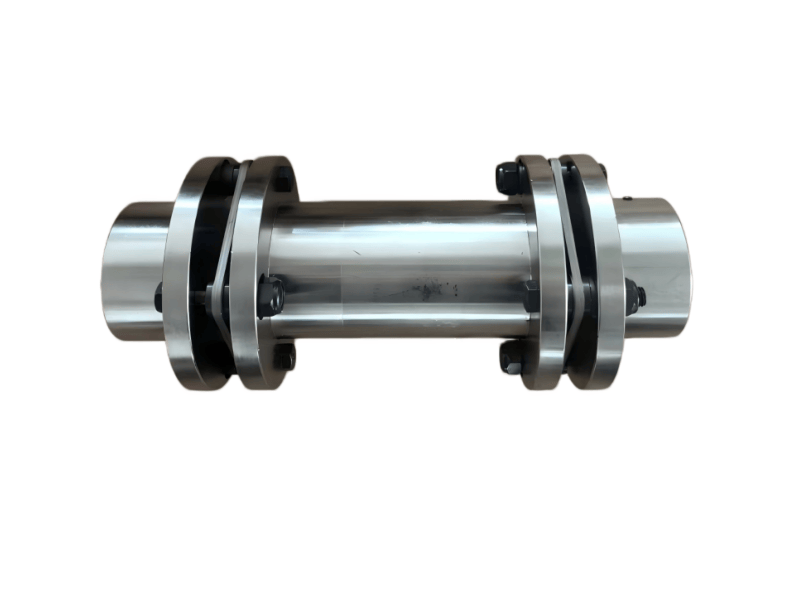
The core elastic component of a feedwater pump Disc Couplings is the metal Disc; the industry primarily utilizes two categories of materials: stainless steel and alloy structural steel. Characterized by high strength, high fatigue resistance, and stable overall mechanical properties—along with excellent resistance to steam and medium-induced corrosion—these materials are capable of withstanding the harsh operating conditions of feedwater pump units, including high temperatures, alternating loads, and steam erosion. Consequently, Disc Couplingss have found widespread, standardized application in industrial drive systems across sectors such as thermal power generation, chemical processing, and water utilities.
Material Suitability for Operating Conditions
Disc Couplingss for feedwater pumps operate in demanding and variable environments, enduring the combined effects of dynamic load impacts, wide-range temperature fluctuations, and exposure to moisture and steam. These complex service conditions impose rigorous requirements on the Disc material's overall durability and environmental adaptability.
Variable-load operation is a primary cause of Disc failure and fracture. As power generation units increasingly participate in deep peak-load regulation, feedwater pumps must frequently switch between high and low load ranges. The continuously changing output torque generates periodic alternating stresses within the Disc; under prolonged cyclic loading, microscopic fatigue cracks readily form. As these cracks propagate, fatigue damage ensues, potentially leading to Disc fracture and coupling failure, thereby compromising the stable operation of the entire water supply unit.
Analysis of the Link Between Material Defects and Disc Fracture
Internal material defects constitute another significant cause of Disc fracture, with inclusions and porosity being the most common defects encountered in the field. Under alternating load conditions, significant stress concentration occurs at the edges of these defects—an effect that intensifies as the number of load cycles increases. This state of localized high stress directly promotes the initiation of micro-cracks at defect sites; these cracks propagate into the matrix, eventually exceeding the material's load-bearing capacity and causing the Disc to fracture.
Causes of Shaft Misalignment and Its Impact on Disc Couplingss
Against the backdrop of deep peak-shaving requirements in the current power market, feedwater pump units frequently undergo significant load fluctuations, making shaft misalignment a critical factor limiting the performance and service life of Disc Couplingss. Regarding the underlying mechanisms, measurement errors during installation and foundation settlement are the primary causes of shaft misalignment. On one hand, alignment measurement errors during installation—such as failure to account for dial indicator stand deflection or insufficient allowance for thermal expansion compensation—directly result in initial geometric misalignment. On the other hand, uneven foundation settlement during long-term equipment operation further disrupts the established alignment. These misalignments subject the Disc to additional loads during torque transmission, thereby accelerating fatigue damage.