



Operation and Maintenance of Gear Couplings
2026-05-27 12:39Gear couplings transmit torque through the engagement of internal and external teeth, offering the capability to compensate for radial, angular, and axial misalignments. These couplings are primarily utilized in medium-to-high-speed, heavy-duty applications involving equipment such as fans, water pumps, speed reducers, rolling mills, and conveyors.
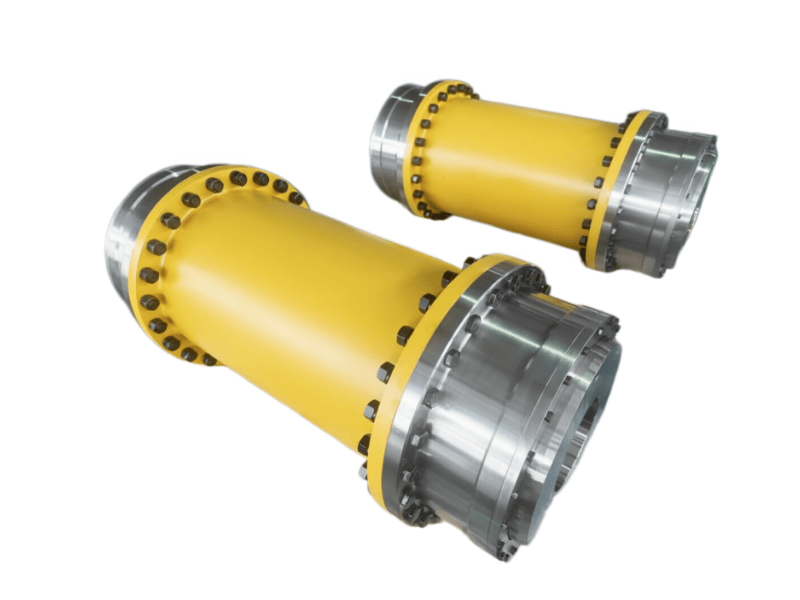
I. Basic Operational Requirements for Gear Couplings
1. Environmental Conditions
Ambient Temperature: -20℃ to +45℃. Protective covers and waterproof/dustproof sleeves are required for outdoor applications or scenarios with high levels of dust and moisture.
Prohibition: Do not operate gear couplings bare (unprotected) for extended periods in environments with corrosive gases, slurry, or heavy dust. This can easily cause tooth surface wear and seizure (jamming).
2. Installation and Alignment
Alignment: The coaxiality (shaft alignment) and end gap of the two shafts must be strictly executed according to relevant requirements.
Fastening: Connection bolts must be tightened to the specified torque and equipped with anti-loosening washers or locking tabs to prevent loosening during operation.
Axial Movement: Standard axial end float must be retained to accommodate the thermal expansion of the equipment.
3. Lubrication Requirements
Continuous Lubrication: Gear couplings require continuous lubrication. Lack of oil will directly lead to dry grinding (scuffing), ablation, and failure of the tooth surfaces.
Grease Quantity: Fill 1/2 to 2/3 of the gear coupling housing. Overfilling the housing with grease will increase the operating resistance of the coupling.
Mixing: Mixing different grades of grease is strictly prohibited.
II. Daily Inspection of Gear Couplings
Appearance and Sealing: Inspect the end caps and sealing areas for any signs of grease leakage or oil seepage. Ensure the dustproof sleeves are free from damage.
Temperature Check: Ensure there is no abnormal rise in the temperature of the gear coupling housing.
Vibration and Abnormal Noise: Listen for any periodic impact or friction noises, and ensure there are no sudden changes in the overall vibration of the machine.
Fasteners: Visually inspect the connection bolts and end cap bolts to ensure they are not loose or missing.
Displacement Observation: Check for any abnormal radial or axial displacement (movement).
III. Periodic Maintenance of Gear Couplings
1. Weekly / Every 100 Operating Hours
Clean external dust and oil stains, and check the integrity of the protective cover of gear coupling.
Re-check the tightening status of all bolts; if loose, re-tighten them according to the specified torque.
Inspect for grease leakage. Observe minor leaks closely; if leakage is significant, replenish the grease promptly and inspect the seals.
2. Monthly / Every 500 Operating Hours (Normal Operating Conditions)
Replenish the same grade of grease to the standard filling level; overfilling is strictly prohibited.
Inspect sealing elements (oil seals, O-rings, felt rings) for signs of aging or damage.
Re-check coaxiality and end gap; if the deviation exceeds the standard, perform realignment.
3. Every 3 Months / Every 1500 Operating Hours
(Shorten to every 1.5 months for heavy-duty, dusty, or high-speed conditions)
Thoroughly replace the grease: Remove the end caps, clean out the old grease, iron filings, and impurities from the coupling housing, wipe it clean, and then refill with new grease.
Inspect the internal and external gear meshing surfaces: Ensure there is no pitting, scoring, spalling, or cracks.
Inspect elastic components, locking devices, and locating rings: Check for any deformation or wear.
Ⅳ. Annual Overhaul (Cumulative 6000 Operating Hours)
Completely disassemble the gear coupling and conduct a comprehensive inspection of the wear on the internal/external teeth, sleeves, and half-coupling tooth surfaces:
If the tooth thickness wear exceeds 10% of the original thickness, or if there are cracks, extensive pitting, or spalling, the parts must be replaced.
Inspect the shaft holes and keyways for wear or key rolling (keyway wall failure). If the damage exceeds the allowable limit, repair or replace them promptly.
Replace all sealing elements uniformly. Clean the coupling housing thoroughly and refill with new grease.
Perform precise realignment and tighten the bolts. Conduct a 30-minute no-load trial run. The equipment can only be put into load operation after confirming there is no abnormal noise, no vibration, and no grease leakage.
For more questions about gear couplings, please consult kudosworld!