


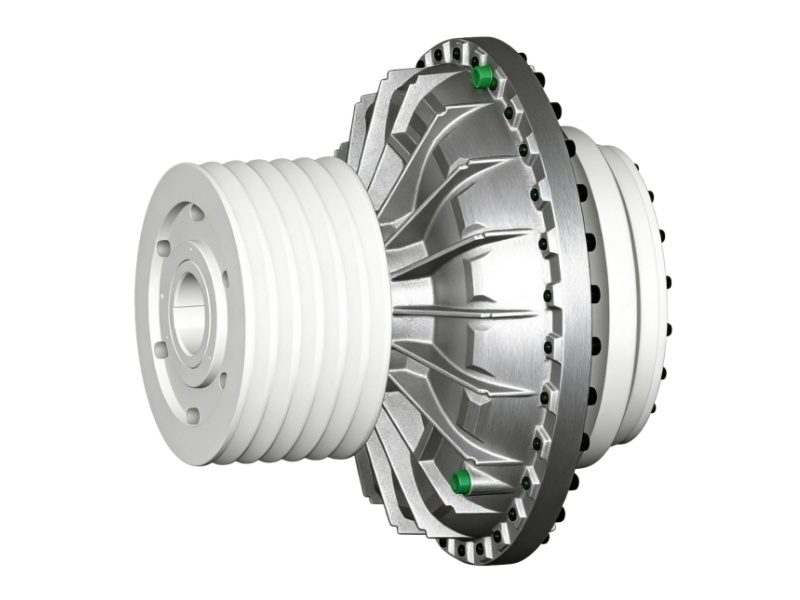
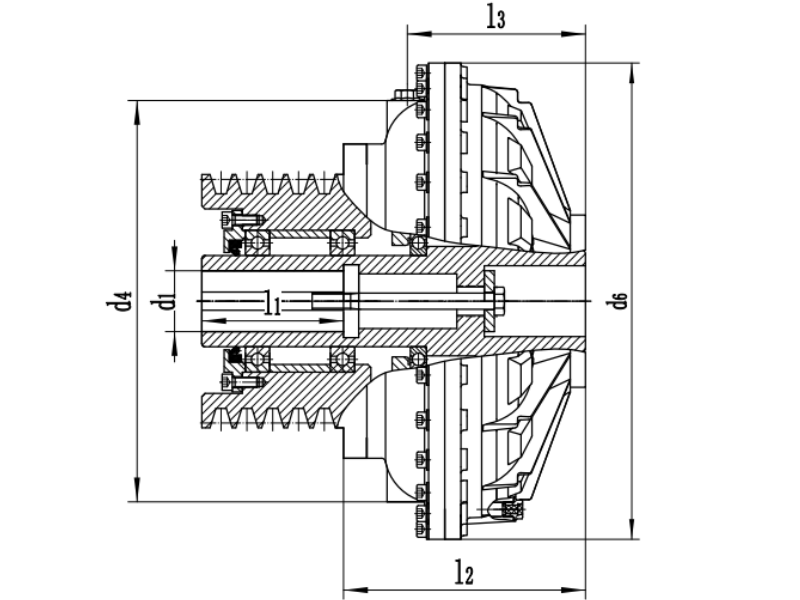
Hydrodynamic Coupling With Pulley
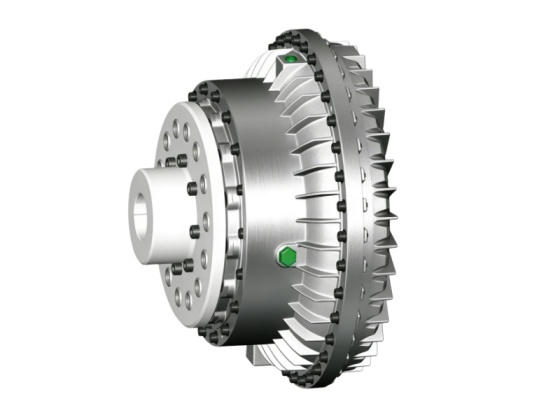
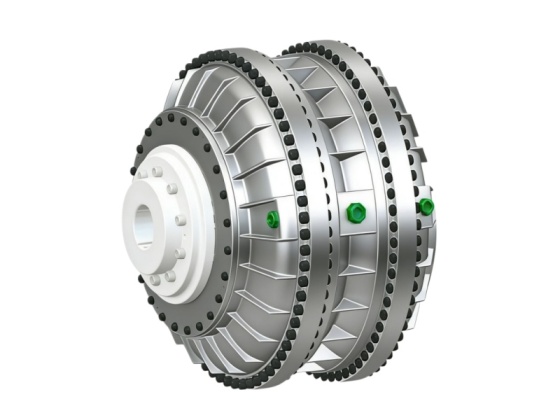
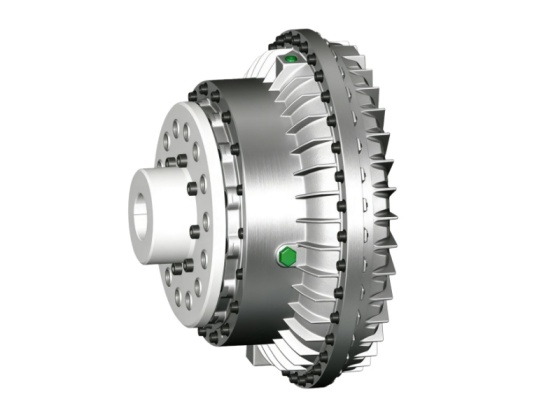
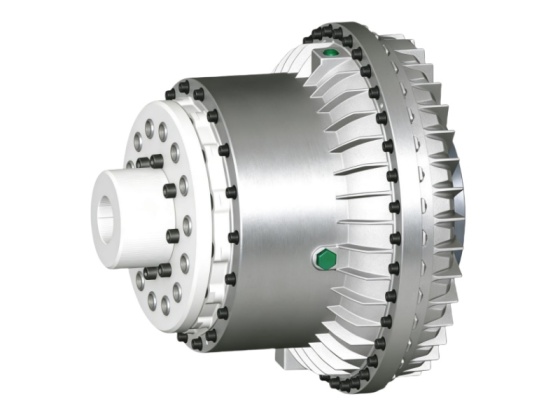
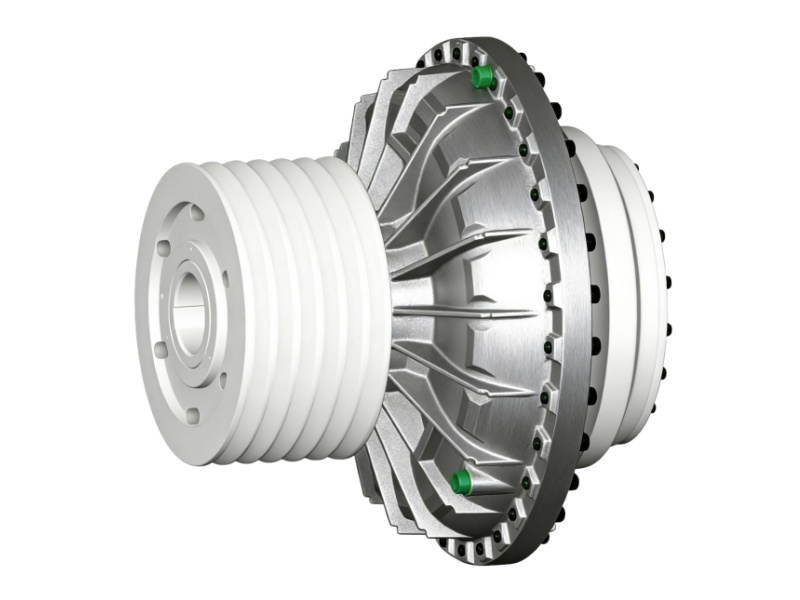
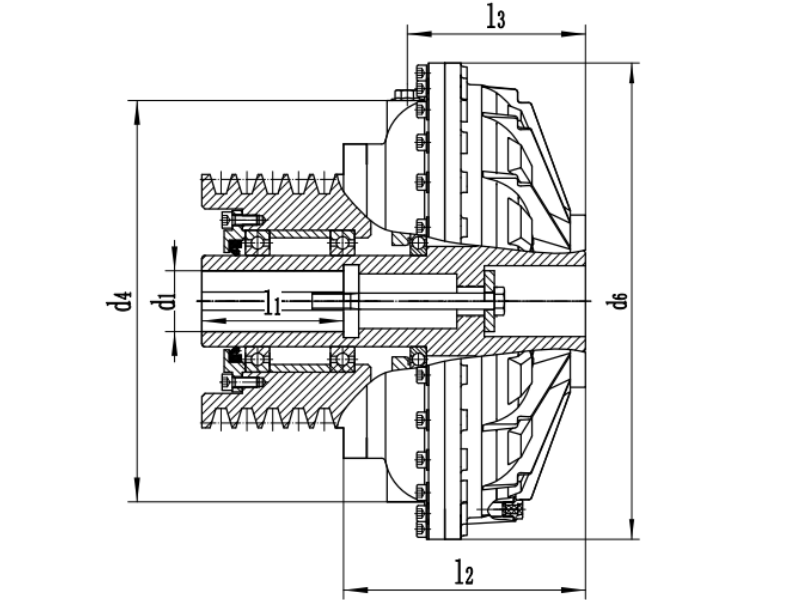
1. The pulley can be fastened on the Hydrodynamic Coupling body directly or through a coupling flange or a coupling sleeve. The type and size of the belt pulley can be customized according to the needs of the user.
2. There may be bearings in the pulley, with good centering and stability. However, if the outer diameter of the pulley is too small, the bearing space will be insufficient.
3. When the output end is provided with a connecting sleeve structure, the pulley is clamped on the sleeve and the wheel can be replaced. This structure can be selected when it is necessary to replace pulleys with different diameters or large pulleys.
- KUDOSWORLD
- CHINA
- 8-12 WORKING WEEKS
- 2,000 SETS/YEAR
- Information
- Video
- Download
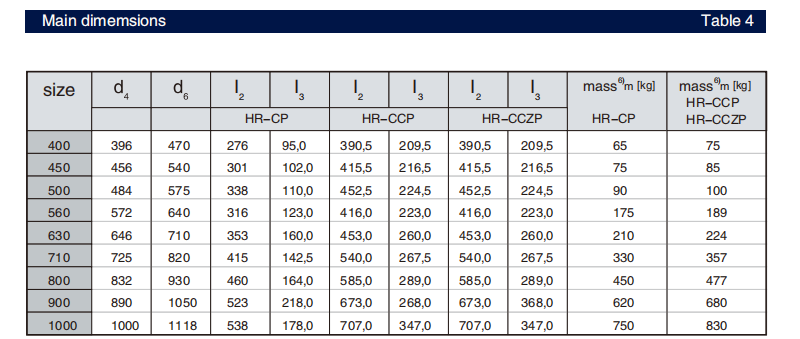
Types of KUDOSWORLD Hydrodynamic coupling
Type HR
·Hydrodynamic coupling without delay chamber
Type HR-C
·Hydrodynamic coupling with delay chamber
Type HR-CC
·Hydrodynamic coupling with enlarged delay chamber
Type P
· Hydrodynamic coupling with pulley
Ex):HR-P, HR-CP, HR-CCP
The pulley design of hydraulic couplings is typically tailored for the following equipment or working conditions:
Heavy-duty machinery:
Applications: Such as mining machinery, metallurgical equipment, and lifting equipment.
Design rationale: These machines often endure high loads and frequent start-stop
operations. Hydraulic couplings can effectively reduce impact and vibration, protecting the equipment.
Conveying systems:
Applications: Such as belt conveyors and chain conveyors.
Design rationale: Conveying systems require smooth startup and operation. Hydraulic
couplings provide soft-start functionality, preventing equipment damage caused by sudden starts.
Pumps and fans:
Applications: Such as centrifugal pumps and axial fans.
Design rationale: These devices require high starting torque during startup. Hydraulic couplings ensure a smooth startup process, reducing impact on motors and equipment.
Power generation equipment:
Applications: Such as hydroelectric generators and wind turbines.
Design rationale: Power generation equipment demands stable operation and efficient transmission. Hydraulic couplings offer excellent speed regulation and transmission efficiency.
Marine propulsion systems:
Applications: Such as ship main propulsion systems and auxiliary propulsion systems.
Design rationale: Marine propulsion systems need to adapt to varying working conditions and load changes. Hydraulic couplings provide flexible transmission and buffering effects.
Chemical equipment:
Applications: Such as mixers and compressors.
Design rationale: Chemical equipment often requires precise speed control and stable operation. Hydraulic couplings deliver reliable speed regulation and operational stability.
In summary, the pulley design of hydraulic couplings is primarily intended to meet the needs of equipment and working conditions involving high loads, frequent start-stop cycles, and the requirement for smooth startup and operation. They provide buffering, vibration damping, and speed regulation functions, protecting equipment and enhancing operational efficiency.